Restore Your Property
Clear your yard, driveway, and fences of dangerous storm debris.
Comprehensive cleanup of fallen trees and broken branches after severe weather.
Dedicated post-storm recovery for Kilsyth properties.
Our Storm Damage Tree Removal Kilsyth service focuses on the extensive cleanup required after major weather events, restoring safety and order to your property.
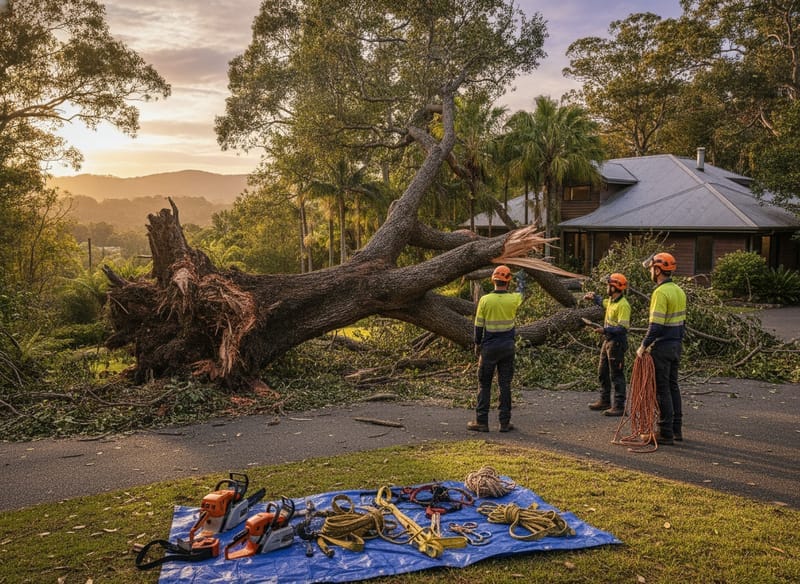
The Yarra Ranges Foothills, including Kilsyth, Mooroolbark, and Montrose, have historically suffered severe damage during winter cold fronts. Mature trees on saturated slopes often fail. Our Storm Damage Tree Removal Kilsyth service is tailored to handle the heavy, large-scale debris characteristic of these local events.
Clear your yard, driveway, and fences of dangerous storm debris.
We remove snagged limbs in the canopy that could fall weeks after the storm.
Our detailed job documentation helps fast-track your insurance claims.
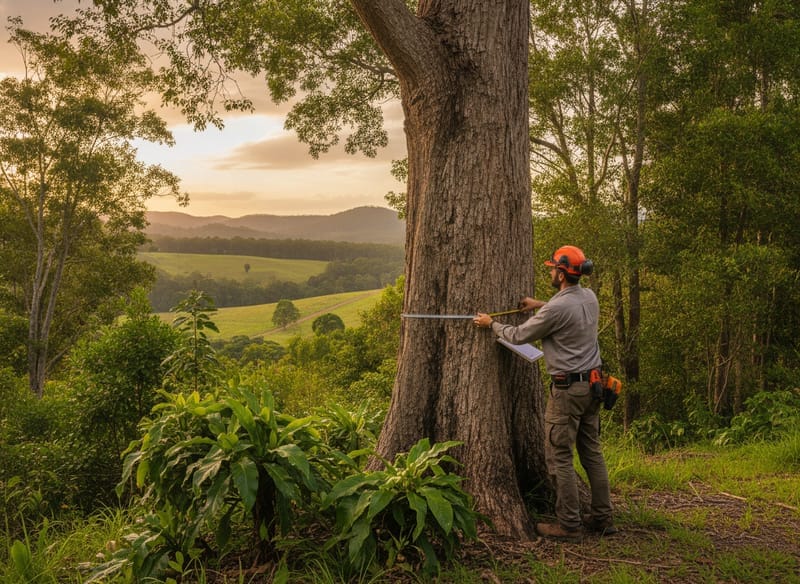
We walk your Kilsyth property to map out fallen trees and hazardous limbs.
We provide a clear scope of work and quote suitable for your insurance provider.
We systematically cut and remove timber, carefully releasing tensioned branches.
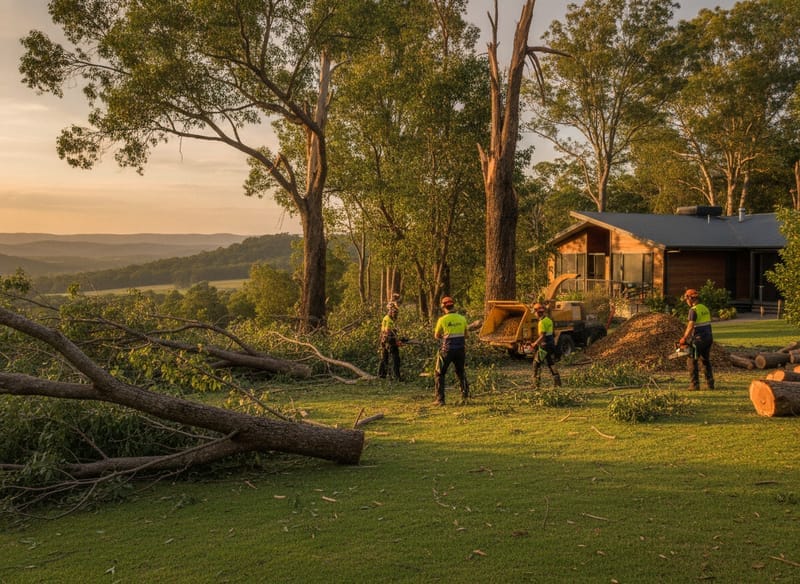
We chip all brush, cut usable firewood if requested, and haul the rest away.
When severe winter and spring cold fronts smash into the Yarra Ranges Foothills, our region's steep terrain and heavily saturated soils inevitably lead to devastating tree failures. If you are dealing with a fallen Mountain Ash across your driveway or a hazardous, hung-up Messmate limb suspended over your roof, our team is here to help. We provide the rapid, professional Storm Damage Tree Removal Kilsyth acreage owners, homeowners, and property managers rely on to restore safety to their sites. We understand exactly what it takes to secure rural residential and suburban blocks following extreme weather events in this specific climate. Whether a severe summer convective storm has uprooted large Mountain Grey Gums, or intense winds have shattered the canopy of mature Dandenongs exotics, our local arborists are fully equipped to respond. We focus on make-safe works, strategic hazard reduction, and complete site recovery. Our priority is always to protect your home, clear your access roads, and ensure your family's safety amidst the chaos of post-storm damage.
Following a severe weather event, it can be highly tempting to fire up a chainsaw and tackle downed branches or uprooted trees yourself. However, storm-damaged trees are incredibly unpredictable and behave vastly differently from standing timber. When a massive local species like a Yellow Box or Candlebark fails, the remaining structure is heavily loaded with hidden tension and compression forces. Cutting into a windthrown trunk or a hung-up limb without professional arborist training can cause the timber to violently snap back, roll, or barber-chair, leading to catastrophic injury or further property damage. Furthermore, unqualified operators and "loppers" often make panicked decisions during a cleanup. They may unnecessarily destroy trees that could have been saved, or resort to aggressive topping and lopping. As outlined in AS4373 - Pruning of Amenity Trees, these poor practices leave dangerous, jagged stubs that invite rapid decay, disease, and weak epicormic regrowth, effectively creating a new hazard for the next storm season. Our experienced climbing arborists bring order to the chaos. We perform thorough post-storm assessments to determine exactly what must be removed and what can be properly restored. By adhering strictly to the Australian Standards, we ensure any corrective pruning on damaged but viable trees is done cleanly, while our advanced dismantling techniques safely extract shattered timber without causing secondary damage to your Kilsyth property, fencing, or remaining garden infrastructure.
Our AQF Level 3 climbing arborists utilise specialised, high-capacity equipment and advanced rigging techniques to safely dismantle storm-wrecked trees across Kilsyth and the surrounding Yarra Ranges Foothills.
We address the highest-priority hazards on your property. This involves safely releasing extreme tension on trees resting on roofs, carports, or powerlines, and removing actively failing limbs to stabilise the site before full extraction begins.
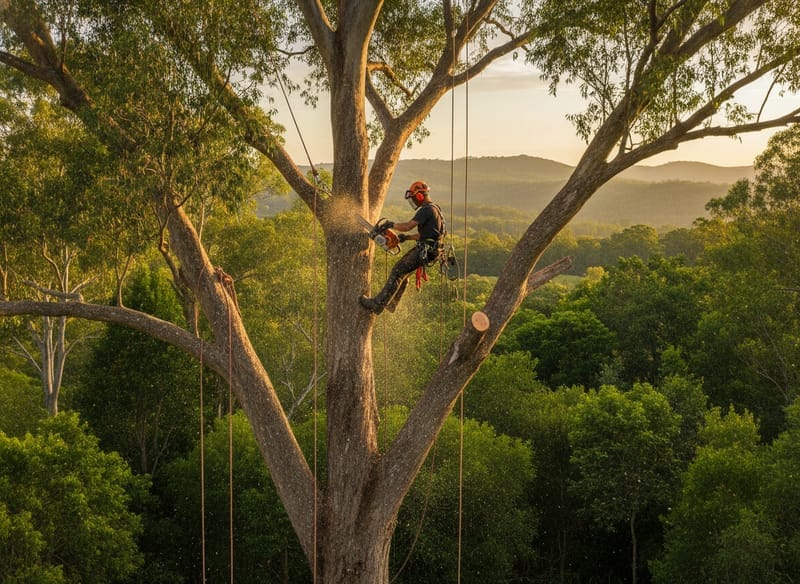
Extreme winds often leave massive broken limbs suspended dangerously in the canopies of adjacent trees. Our climbers use single-rope access and advanced rigging systems to secure, lower, and safely extract these "widow-makers" without damaging the structural integrity of the host tree.
When saturated Kilsyth soils cause whole-tree windthrow, the exposed root plate becomes highly unstable. We carefully calculate the tension and use heavy-duty ground saws to systematically sever the trunk, ensuring the massive root ball falls back into its cavity safely rather than tipping forward onto our crew.
On steep, gully-side properties where wheeled Elevating Work Platforms (EWPs) cannot safely operate, we rely on sophisticated rope-rigging and heavy-duty winches. This allows us to pull fallen timber up steep embankments and safely away from vulnerable residential structures.
Once the hazards are neutralised, we process all shattered canopy debris using our high-capacity wood chippers. We can turn dangerous storm waste into usable, high-quality mulch for your acreage, or completely haul the logs and debris away in our tipper trucks.
When you contact us for emergency tree work in Kilsyth, our response is structured, safe, and highly efficient to minimise further disruption to your life. First, we conduct an immediate and thorough site triage. Our arborists will walk your property to tag trees by priority: identifying immediate life-and-property hazards over houses or driveways, noting secondary hazards like hung-up limbs in the mid-canopy, and assessing standing-but-compromised timber for potential retention, hazard reduction, or total removal. Next, we provide a detailed, itemised quote. Because insurance claims are standard practice after a major weather event, we break down each job line clearly and provide comprehensive pre-work photo evidence. This structured documentation is specifically formatted to streamline your submission and secure rapid approval from your insurer. Once the scope is approved, our team moves into the execution phase. We prioritize make-safe works, deploying our top-handle climbing saws and heavy ground saws to systematically dismantle the most dangerous elements. We utilize ropes, pulleys, and friction devices to precisely control the descent of heavy, erratic debris away from your assets. Finally, we execute a comprehensive site cleanup. We chip the smaller branches, process large logs to your specific requirements, and use our mini-loaders to clear your driveways, lawns, and paddocks, returning your property to a safe, functional state.
Storm cleanup is inherently high-risk work, and you need a properly credentialed team operating on your property. We operate under strict adherence to AS4373 (Pruning of Amenity Trees) for any canopy restoration, ensuring acceptable pruning types like selective pruning or crown reduction are used to save viable trees. For sites requiring complex council reports for retained trees, our consulting arborists hold AQF Level 5 diplomas and work to AS4970 tree protection standards.
Our climbers and ground crew are fully ticketed, holding current qualifications for complex tree felling, working at heights, and elevated work platform (EWP) operation. Most importantly, our business is fully public liability insured and covered by WorkCover. We ensure total peace of mind while we tackle high-risk, tension-loaded storm debris on your property.
Working in the Yarra Ranges Foothills requires deep knowledge of both complex terrain and strict local planning rules. Kilsyth features undulating landscapes, narrow access roads, and massive, shallow-rooted Mountain Ash and Red Stringybark trees that are highly susceptible to windthrow when our local soils become deeply saturated in winter. Under the Yarra Ranges Planning Scheme, many properties are governed by the Significant Landscape Overlay (SLO), the Bushfire Management Overlay (BMO), or even the Erosion Management Overlay (EMO) on landslip-prone slopes. Additionally, Clause 52.17 Native Vegetation heavily regulates the removal of local native species. While there are common council exemptions allowing the removal of vegetation posing a direct and immediate risk to people or property, it is critical to understand that only the strictly hazardous part of the tree is covered. Our local arborists know exactly how to document an emergency Storm Damage Tree Removal Kilsyth job to ensure you remain fully compliant, preventing you from accidentally breaching local laws during a stressful post-storm cleanup.
After a major storm, the work does not end once the immediate debris is cleared. It is absolutely vital to monitor your retained trees closely over the following months. Keep an eye out for any signs of root heave—such as cracking soil around the base of large Eucalypts—or sudden, unexplained dieback in the upper canopy. If you notice heavy, weak epicormic regrowth or hanging deadwood that was not visible during the initial cleanup, call us back. We highly recommend scheduling an annual preventative arborist inspection every autumn to complete structural pruning, manage weight distribution, and ensure your Kilsyth property is fully prepared before the next severe weather season strikes.
Storm cleanup is quoted based on the volume and complexity of the debris.
Contact us for an accurate, insurance-friendly cleanup quote.
Post-storm response available across the area.
Contact our local experts for fast, safe, and complete storm cleanup.
Get a Cleanup Quote