Regain Control
Bring overgrown, dominating trees back to a size that suits your block.
Safe canopy reduction and size management by qualified arborists.
Managing oversized trees across Kilsyth and the Foothills.
When property owners ask for Tree Lopping Kilsyth, they usually need a tree brought back down to a manageable size. We deliver this through proper arboricultural techniques.
Many Kilsyth blocks feature older exotics or towering natives that have outgrown their residential space. Our Tree Lopping Kilsyth service focuses on converting these overgrown assets safely without destroying the tree's health or breaching Yarra Ranges Planning Scheme rules, which specifically penalize illegal lopping.
Bring overgrown, dominating trees back to a size that suits your block.
Avoid the internal decay and structural failure associated with poor lopping practices.
Have peace of mind knowing the work is done properly by certified experts.
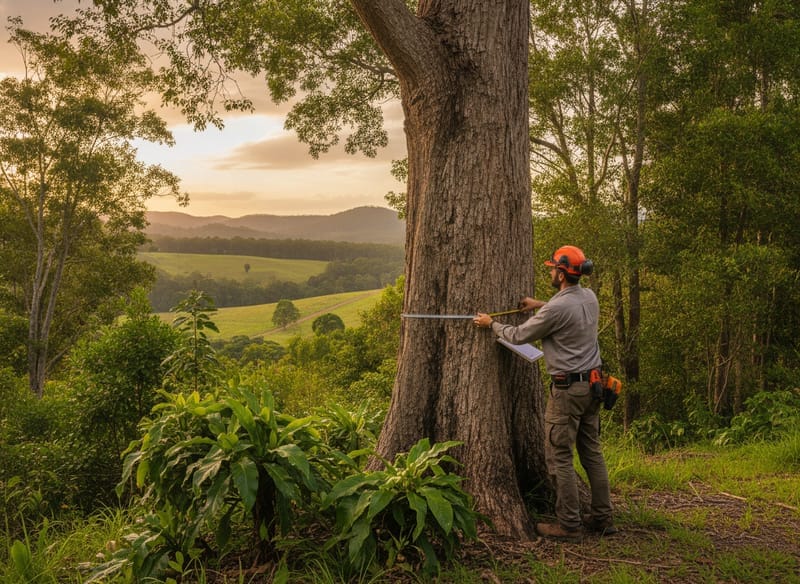
We evaluate the overgrown tree and listen to your size-reduction goals.
We verify if the planned reduction falls within council exemptions.
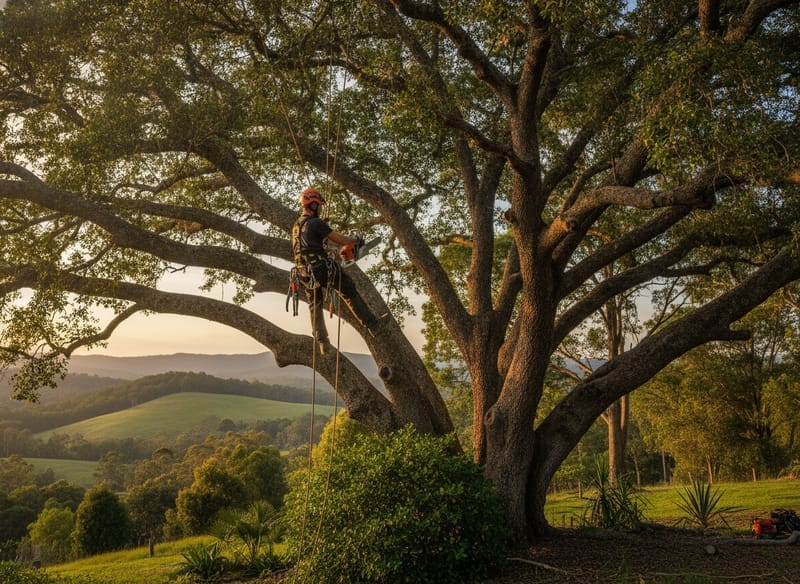
Our team selectively removes limbs to reduce size while retaining an active, healthy canopy.
All trimmings are removed, leaving your yard clear of debris.
When oversized canopies threaten roofs, block winter sunlight, or drop heavy debris across boundaries, homeowners frequently search for professional Tree Lopping Kilsyth services to bring their properties back under control. Kilsyth sits right on the transition line between traditional suburban blocks and the sprawling, heavily vegetated acreage of the Yarra Ranges Foothills. This unique positioning means properties here are often dominated by towering native eucalypts and mature exotic trees that outgrow their environment over time.
While the term 'lopping' is widely used by homeowners wanting to simply make a tree smaller, true professional arboriculture requires a much more strategic approach. Indiscriminate hacking destroys tree health and creates major safety hazards down the line. Our team focuses on reducing your canopy size, clearing overhanging branches, and resolving clearance issues while actively preserving the structural integrity of the tree.
Whether you are managing a residential boundary on the valley floor or a sloped acreage block exposed to severe weather fronts, our climbers and trucks are equipped to deliver safe, effective canopy reduction. We help you achieve the manageable, smaller tree you want without compromising on safety or local council compliance.
In the tree industry, there is a massive difference between what homeowners mean when they ask for lopping and what unqualified operators actually do. You simply want your tree reduced in height or width so it stops encroaching on your home. Unfortunately, a poorly trained 'lopper' will achieve this by bluntly 'topping' the tree—cutting thick branches right in the middle without any regard for growth nodes or branch collars. This crude topping is the worst thing you can do to an established tree. It removes the tree's ability to seal the wound, inviting rapid fungal decay and rot straight into the trunk. Worse, the tree enters a state of panic, rapidly pushing out 'epicormic shoots'. This fast, spindly regrowth is only attached to the outermost layer of bark, not the structural hardwood. Within a few years, these heavy, weakly attached limbs become severe hazards, highly prone to snapping during Kilsyth's intense winter windstorms. Our solution is completely different. We translate your request for a smaller tree into AS4373-compliant pruning. Instead of topping, we perform professional crown reductions and selective pruning. We shorten branches back to natural lateral growth points. This achieves your goal of a reduced canopy and improved light penetration, while ensuring the tree heals properly, maintains its natural shape, and remains structurally sound for decades.
When clients ask us to lop their trees, our goal is to deliver the size reduction they need using methods that keep the tree healthy and safe. We rely on the following targeted arboricultural techniques.
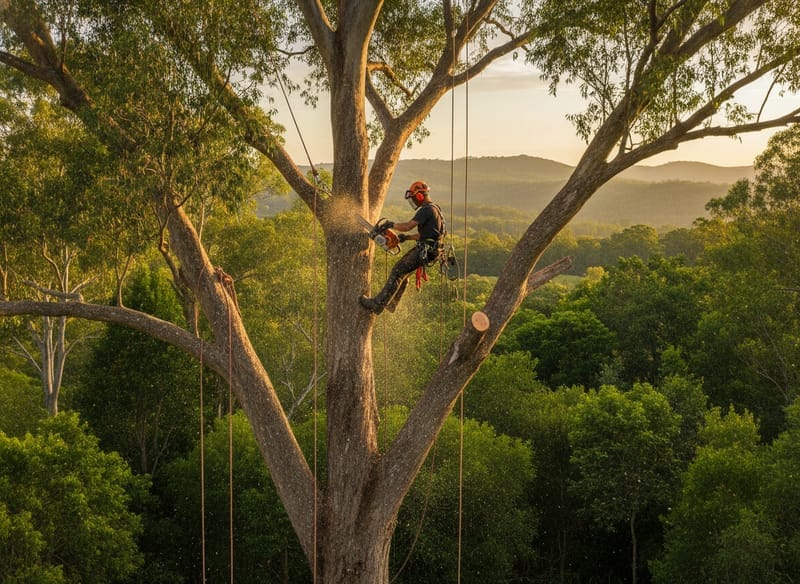
When a tree has grown too tall for its location, we use targeted crown reduction instead of indiscriminate topping. Our climbing arborists carefully shorten the main leader branches back to appropriate lateral branches. This significantly reduces the overall height and spread of the canopy, minimizing wind resistance and leverage, all while maintaining the natural, healthy silhouette of the tree.
Often, a tree doesn't need to be shortened from the top; it just needs to be cleared from the bottom. We carefully remove the lower limbs to elevate the canopy. This provides essential clearance for driveways, footpaths, roofs, and outbuildings, allowing for unimpeded access and drastically improving sunlight penetration into your home and garden.
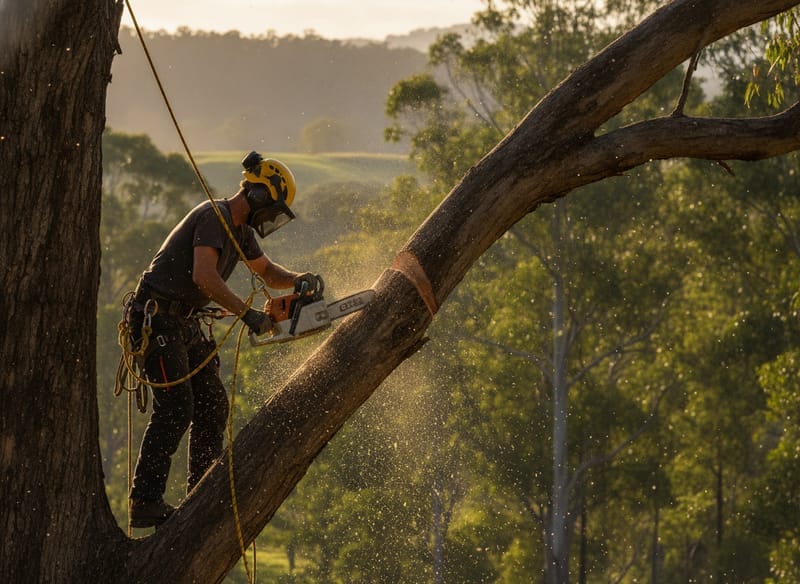
If a specific section of the tree is causing issues—such as heavy limbs overhanging a neighboring fence line or encroaching on service wires—we utilize selective pruning. We target only the problematic branches, removing them cleanly at the branch collar. This solves boundary disputes and structural hazards without impacting the remainder of the tree's canopy.
Following severe storm damage, partial canopies or massive limbs can be left hanging, requiring immediate intervention. We use rope-access techniques or elevated work platforms to safely dismantle the shattered and hanging sections, reducing the immediate hazard and stabilizing the remaining structure of the tree until further assessment can be made.
Every successful canopy reduction starts with a thorough, on-site assessment. We don't just quote over the phone; our local arborists visit your Kilsyth property to assess the specific tree species, its overall health, and its structural stability. We discuss exactly what you want to achieve—whether that is clearing a roofline, reducing shade, or managing wind risk. We also check the local planning scheme to determine if your requested works require a permit. Once a plan is agreed upon, our team arrives fully equipped for the job. Because Kilsyth properties often feature a mix of tight residential access and steeper foothill blocks, we utilize versatile access strategies. Where possible, we bring in our Elevating Work Platforms (EWPs) for efficient canopy access. For trees tucked behind houses or on difficult slopes, our AQF Level 3 climbers utilize advanced rope-access techniques to safely navigate the canopy. During the cutting phase, all limbs are sectioned and lowered with heavy-duty rigging to protect your gardens, fences, and roof below. As we work, the ground crew processes the removed limbs through our high-capacity wood chippers. By the time we pack up our trucks, your tree is beautifully reduced, structurally sound, and your property is completely free of debris and branch waste.
All of our canopy reduction work is strictly guided by AS4373 - Pruning of Amenity Trees. We completely reject the outdated, destructive practice of lopping and topping, ensuring every cut we make promotes long-term tree stability and health. If your site involves development or construction, we also operate in accordance with AS4970 - Protection of Trees on Development Sites.
Safety and qualifications are non-negotiable for our team. All of our canopy climbers hold AQF Level 3 in Arboriculture, while our consulting arborists hold AQF Level 5, allowing us to provide formal arborist reports when Yarra Ranges Shire Council requires them. We are fully covered by comprehensive Public Liability and WorkCover insurance, protecting you, your property, and our crew during high-risk canopy work.
Delivering professional Tree Lopping Kilsyth requires deep local knowledge of both the environment and council regulations. The Yarra Ranges Foothills support a specific mix of towering eucalypts. In Kilsyth, it is common to find fast-growing Candlebark, Yellow Box, and Messmate Stringybark. These species are highly susceptible to sudden limb failure and whole-tree windthrow when severe cold winter wind fronts hit the saturated soils of the foothills. Because of these risks, canopy management is a routine necessity. However, tree work on private land here is heavily regulated by the Yarra Ranges Planning Scheme. The Significant Landscape Overlay (SLO) covers much of the area, and even the pruning of native vegetation can trigger the need for a permit under Clause 52.17, depending on the trunk diameter and the volume of canopy being removed. Furthermore, many Kilsyth properties fall within the Bushfire Management Overlay (BMO), which dictates specific canopy clearances and defendable space around dwellings. Our team understands exactly how these overlays intersect. We guide you through the available exemptions for light pruning or hazard reduction, and if a council permit is required for heavy reduction, we can supply the necessary AQF Level 5 arborist reports to streamline your application.
After a significant canopy reduction, your tree will require a period of adjustment. Even with perfect AS4373-compliant cuts, reducing a tree's foliage removes a portion of its energy-producing leaves. To help the tree recover, we recommend applying a thick layer of organic mulch over the root zone and ensuring the tree is deeply watered during the dry Kilsyth summer months.
Keep an eye on the canopy over the following seasons. While proper branch collar cuts minimize panic growth, some vigorous native eucalypts may still produce a flush of epicormic shoots. We recommend scheduling a follow-up inspection with our arborists every two to three years. This allows us to assess the tree's structural healing, thin out any overcrowded regrowth, and ensure the canopy remains safe, manageable, and exactly the size you need it to be.
Pricing depends on the scope of the reduction and the size of the tree.
Contact us for a free quote on safe, effective canopy reduction.
Servicing Kilsyth and surrounding suburbs.
Contact us for professional, safe, and legal tree reduction services.
Get a Free Quote